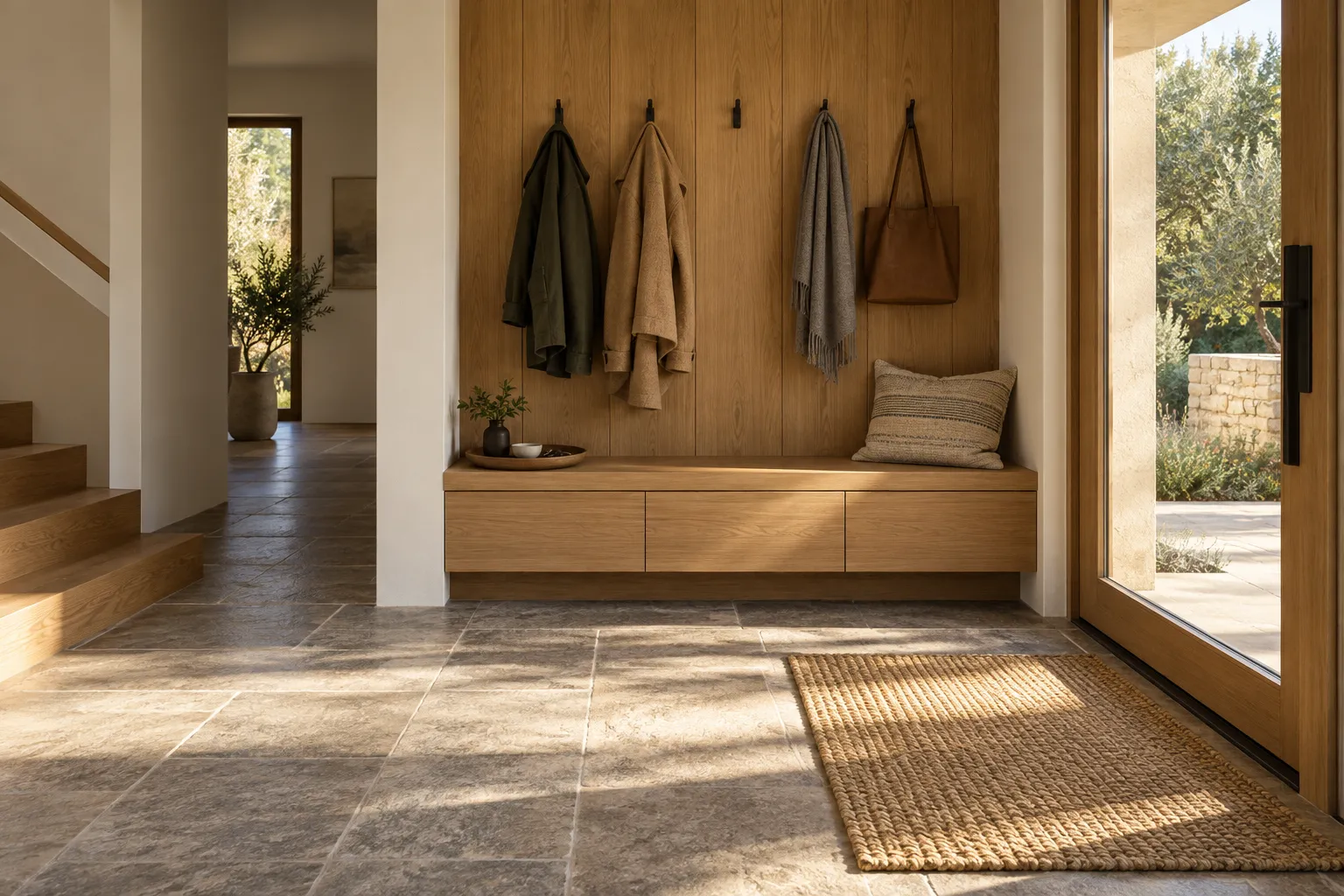
The entryway is where a home meets the outside world. Keys, bags, shoes, coats, deliveries, and wet umbrellas all arrive there, often at the same moment. A small entry can feel composed if it gives those objects a logical place and preserves an easy route through the door. A larger one can still feel chaotic if storage is beautiful but too far from where people naturally pause. The best design begins with the first movements of coming home and leaving again. An entryway need not contain a complete furniture collection. It may need only a hook, a durable surface, good light, and a place to sit. The right combination depends on who lives there, the weather, and what happens immediately after the door opens. Observe the space for a week before buying anything. Daily behavior will reveal more useful requirements than an idealized photograph of an empty hall.
Notice where things actually land
Watch what people do in the first few steps through the door. Do they drop keys on a nearby table, put a bag on the floor, remove shoes immediately, or carry everything farther into the house? These actions suggest where storage belongs. If a hook is placed beyond the point where coats are naturally removed, it may remain unused while a chair collects clothing.
Make a short list of objects that arrive every day and those that arrive only occasionally. A tray might be enough for keys and a card; a closed cabinet may be needed for several pairs of shoes. Packages and mail require a temporary landing place, but that place should not become permanent overflow. Ask where those items go next and make the route easy.
Try reversible changes first. Move a small table or add a temporary basket and see whether clutter follows the new arrangement. A successful entry reduces decisions at a busy moment. People should be able to put an object away almost automatically while still having enough room to open the door and greet someone.
Protect the door and the path
Measure the door swing, clearance for people carrying bags, and the route into the main room. A narrow console can make a hall feel finished while quietly obstructing every arrival. Tape out any proposed cabinet or bench and walk past it with a coat or grocery bag. Check whether doors to nearby rooms can open fully and whether two people can pass at the times they often arrive together.
The entry is a circulation space before it is a display. Keep projections modest where the route is tight. Hooks can be useful, but coats hanging from them take more space than the hardware alone. A shoe cabinet must be measured with its door or drawer open. A bench needs a position where someone can sit without blocking the only way through.
Consider accessibility and different users. Children may need lower hooks; an older visitor may appreciate a stable seat; someone using mobility equipment may need more open space. A clear, well-lit path helps everyone. The design should not depend on keeping the entry perfectly empty to remain usable.
Give shoes a realistic home
Shoes are often the most visible source of entry clutter because they are used frequently and may be wet or dirty. Count the pairs that truly need to stay near the door. Daily shoes should be easy to retrieve; seasonal or special pairs can be stored elsewhere. A cabinet sized only for the neatest shoes may fail when boots or larger sizes arrive.
Choose the storage format around ventilation, cleaning, and access. An open rack makes shoes visible and may allow them to dry, but it can look busy. A closed cabinet calms the view, yet damp shoes should not simply be sealed away without care. A tray can protect the floor during wet weather and be cleaned easily. If a household removes shoes on entering, a seat and enough room to stand safely are as important as the cabinet.
Keep the system simple enough for everyone to use. A deep cupboard where pairs disappear behind one another may increase mess rather than reduce it. A small number of clearly assigned places can work better than elaborate dividers. Review the entry after a month and move little-used pairs out before buying more furniture.
Plan coats and bags by frequency
A hook is effective when it is close to the point where a coat comes off and strong enough for the intended load. Too many hooks can invite a permanent wall of clothing. Decide how many daily coats and bags should remain visible and where the rest will go. A closed wardrobe may make sense for a family, but its depth and door operation must fit the entry.
Think about wet items. Coats and umbrellas may need a place to dry without damaging walls or flooring. A decorative basket might hold scarves but be unsuitable for a damp umbrella. Choose materials and positions that tolerate the local weather. If the entry has no ventilation or is very narrow, some storage may be better placed just beyond it in a more suitable area.
Bags vary in size and weight. A shallow shelf may hold a small handbag but not a backpack full of equipment. Measure the real objects and make sure the storage is easy to reach on the way out. The ideal entry system reduces forgotten items without turning the door area into a warehouse.
Make lighting part of arrival
The entry should be easy to understand at any hour. Light needs to reach the door lock, storage, floor, and the route into the home without creating glare. A single decorative pendant may provide atmosphere but leave a dark corner where shoes are stored. Layered light may be helpful: a clear general source and a smaller lamp or wall light that makes the space welcoming in the evening.
Control should be intuitive. A switch near the door matters more than a complicated scene. If the entry connects to stairs or a long hall, consider how light continues along the route. Avoid mirrors or glossy surfaces that reflect a bare bulb directly into someone's eyes. For any fixed electrical changes, use qualified local professionals and appropriate products.
Daylight can make a small entry feel generous, but privacy may be needed. A glazed door or nearby window might benefit from a treatment that admits light without exposing the whole interior. Observe the entry from outside as well as inside before deciding. The first view of a home should feel clear and comfortable to its occupants.
Choose flooring for traffic and weather
The floor at the entry receives grit, moisture, and frequent foot traffic. Select materials and mats for those conditions, not solely for how they appear when new. A rug may soften the space, but it should not catch under the door or become slippery. Check the maker's cleaning guidance and how the surface performs when wet. A durable, easy-to-clean area near the threshold can protect more delicate flooring beyond.
Transitions need thought. A hard-wearing entry surface can be visually related to the rest of the home through color or proportion without being identical. A sudden change in material may make a compact hall feel chopped into smaller pieces; a considered junction can make it feel intentional. If flooring work affects levels or accessibility, consult qualified local help.
Plan for cleaning. Can the mat be lifted and washed? Is there space to sweep beneath a bench or cabinet? A beautifully detailed entry will not remain pleasant if every muddy day requires moving heavy furniture. Ease of care is part of its welcome.
Use a mirror and a surface deliberately
A mirror can bounce light, make a narrow entry feel more open, and support a final check before leaving. Its position matters. A mirror facing a cluttered shelf may multiply the sense of disorder; one reflecting daylight or a calm wall can feel more generous. Check what it shows from the door and from the main room. Secure it appropriately for the wall and its weight.
A small surface can be invaluable for keys, mail, or a bag while someone puts on shoes. It should be near the natural stopping point and large enough for the intended objects, but not so deep that it consumes the route. A drawer or tray can contain small items and prevent the top from becoming a random collection. Consider whether a bench could provide the needed landing place instead of adding another piece.
Decoration should support the entry's function. A single artwork or object can make arrival personal; many small pieces may compete with coats and bags. The room will have visual activity whenever it is used, so leave space for real life in the composition.
Connect the entry to the rest of the home
An entry should offer a gentle transition rather than an abrupt reveal or a confusing barrier. Consider what a visitor sees when the door opens. A view toward a window, a familiar material, or a well-placed lamp can give the route a destination. Storage can screen private areas without making the space feel closed. These relationships are especially important in a compact apartment where the entry may open directly into living space.
Repeat one or two material ideas from nearby rooms. A timber tone in a bench might relate to a dining table; a wall color might continue into the hall. The goal is continuity, not a complete matching set. A clear visual thread can make a small entry feel like part of the architecture rather than an afterthought attached to the front door.
Think about what happens when guests arrive. Is there a place for an extra coat? Can two people stand while exchanging greetings? The entry should accommodate these moments without requiring a permanent quantity of furniture sized for the rarest event. Flexible hooks or a nearby closet may be enough.
Adjust the system after living with it
Set up the simplest version of the entry and use it through a normal week. Notice what still lands on the floor, which hooks are ignored, and whether the light feels sufficient at night. If a basket fills with unrelated objects, its purpose may be unclear. If shoes accumulate beside a full cabinet, some rarely used pairs may need to move elsewhere. These observations are design feedback, not evidence that the household has failed to be tidy.
Repeat the observation when the season changes. Winter coats, muddy shoes, summer hats, and school bags place different demands on the threshold. A cabinet planned only around the lightest season can become overwhelmed for months. Adjustable shelves, hooks that can be reassigned, or a nearby secondary storage location may help. Do not leave every seasonal item at the door all year simply because it once belonged there. A small entry works best when its contents are edited as routines change. If several people share the home, give each person a clear place for the few things they need daily. That can be a hook, tray, or shelf rather than a separate cabinet. The system should be understandable even when someone is in a hurry, and it should allow one person to arrive without blocking another from leaving.
Make one change at a time. Move a hook, change a tray, or shift the bench before replacing the entire storage system. Test the arrangement in wet weather and when several people arrive together. A solution that works only for one person on a quiet day may need more capacity or clearer zones.
The best entryway makes leaving and returning feel easier. It keeps the route open, gives daily objects a natural place, and withstands the weather and traffic at the door. Its calm appearance follows from those practical relationships. Check the arrangement with a guest as well as the regular household, because unfamiliar use often reveals hidden obstacles. Even a very small threshold can feel generous when it supports the first and last actions of the day.
Put storage at the point of use and protect circulation through the door.
These are general design considerations. Product dimensions, materials, installation requirements, and care instructions should be checked with the relevant maker or professional before purchase or work begins.